Apple App Store Download For Mac
Embed this Program Add this Program to your website by copying the code below. Preview Preview. It was only a matter of time before Apple which duly arrived at the beginning of 2011. Of course, there has been the for quite some time now but the Mac App Store is a much more dedicated and OS X integrated affair that makes browsing, downloading, installing and updating Mac Apps much slicker.
Perhaps most importantly however, it removes the file hosting burden from developers, gives them much wider coverage for their apps and of course, offers both them and Apple the chance to make more money from their creations. To use the Mac App Store, you'll need to upgrade to OS X 10.6.6 via Software Update which is available here. Download sizes vary, but it the system update can be as large as 1GB. Once installed, you'll have access to the App Store via a blue App Store icon in your Dock or via your Menu Bar. The main window features a cycle of different promotions which can change several times while you're using the store. The amount of information is a bit overwhelming at first with New and Noteworthy, Staff Favorites, What's Hot and the Top 10 Sales, Free and Grossing all vying for space in the main window. You only get one screenshot in some cases which is a bit limited but you can read lots of customer reviews, program details plus links to more apps by the same developer.
To download the application, you'll need to click on the 'Free' or 'Payment' button in the top left hand corner. You'll then be prompted to sign into your Apple account (or sign-up for one). If you've never used your ID to purchase anything from Apple - such as an iTunes track for example - you'll be prompted to review your account details and enter credit card information in case you want to purchase apps. Users who only intend on downloading free apps may object to this and perhaps there should be an option to omit this unless you want to purchase apps. Installation of applications is incredibly fast - a status bar in the Dock icon reveals how much time is left for downloading and installation and apps are ready to use in your Dock within seconds depending on the size of the application.
This is definitely one of the Mac App Store's strongest features. Even better, updates take place automatically although there's no guarantee they will be free if the developer chooses to charge a fee.
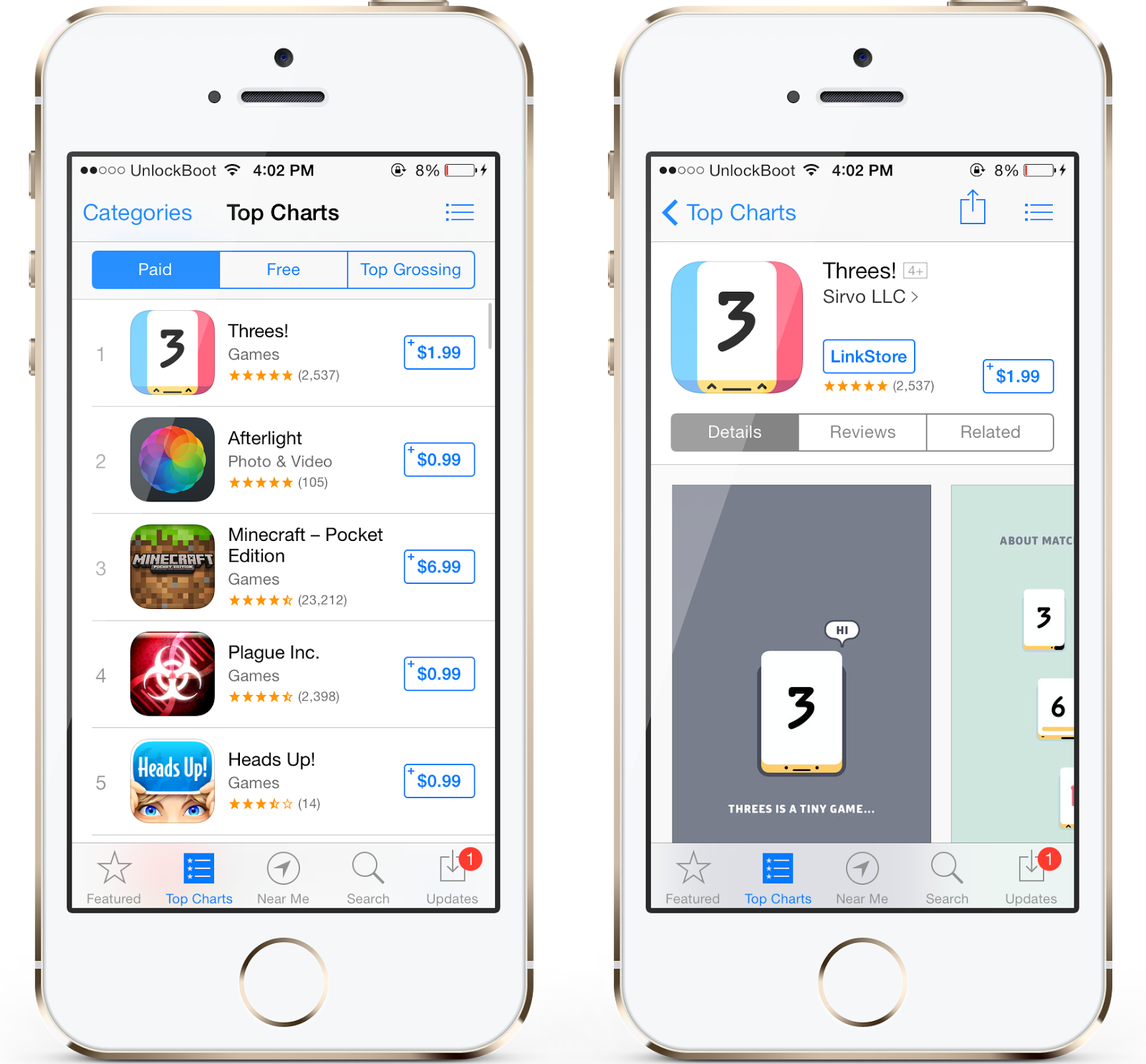
Overall, the Mac App Store finally brings Macs into line with iPhones in terms of convenience of trying new applications.
I’ve been using Windows since version 3.1, and while I have Macs and Linux computers that I occasionally use, my primary environment is still Windows (7). But if there is one thing that I find somewhat cumbersome, if not annoying, then it’s the time involved to update 3 rd party applications. Even when one tries to keep the number of applications to a minimum, a power user will always end up with at least a dozen 3 rd party tools like a Web browser (and associated baggage like Flash, PDF), productivity tools, notepad replacements and so forth. So whenever the vendors of these tools come out with updates, we download and apply them. All these vendors have different ways of applying updates. Some have their own update tool, some require you to download a new setup, some have a patch, some utilize MSI, and so forth. The result is obvious; the user is required to manually update all of his applications, an ongoing and time-consuming process that will continue for as long as the end user has 3 rd party applications (that are being updated).
The upcoming Mac App Store aims at making both installing, and presumably updating, applications easier and more efficient. I’m personally not concerned about downloading and installing applications, something that’s fairly straightforward on Windows.
But it’s the update process that will inevitably come with the App Store, which will make users on OS X more efficient, less frustrated and potentially more secure. If you are a Windows user, then close your eyes for a moment and imagine an icon on your desktop that reads “My Software Updates”. OK, if you close your eyes then you won’t be able to read this paragraph so why don’t we just pretend we’re having a dream about the next version of Windows. This icon would also look different depending on whether software updates for all of your registered 3 rd party applications are available or not. You double-click the icon, and you see a magical list of all available updates for your installed software. It would show you the name of the application, the installed version, the available version, as well as the ability to view details about the update. Then, you have an “Update All” button.
Pressing this button will download and install all updates seamlessly. Of course, you can still apply individual updates if you so wish – maybe when you are on a wireless network with limited bandwidth and just need a particular fix. To be fair, installing a patch every now and then is not the end of the world of course. But I’ve been doing it for many years now, and it’s several other million users that have been doing it as well. How much time are Windows users spending downloading and installing updates? That time could be spent inventing the next compost-powered recycled plastic car!
I think it’s fair to state that the world’s largest maker of a desktop operating system needs to get with it, and offer 3 rd party developers a way to hook into a standardized application update mechanism. While there are a lot of things to consider for such a system – including security – it wouldn’t be all that complicated. As a first, a software vendor would register its application with Microsoft and specify product details, for example from which server the Windows clients would software downloads updates for the product. When the 3 rd party app is installed, it would register itself, through some new APIs, with Microsoft’s software update sub-system. This would tell the sub-system which product and version has been installed, and from that moment on Windows would periodically check for the latest version. No doubt, the trickiest part would be the update process itself.

Apple App Store Download For Windows 10
Updates distributed in such a way shouldn’t have a user interface while the patch or new version is installed, and any customizations would need to be deferred until the updated software is launched for the first time during the update. After the update was (successfully) applied, it would again call the new API and register the new version. If an error occurred, a standardized way of logging any errors – maybe through the Windows event log – should be defined.
Oh, and please don’t require MSIs – software vendors should be free to distribute their patches and updates whichever way they want – as long as it adheres to some basic requirements such as running silently in the background. This shouldn’t be a mandatory process, and I don’t envision any censoring on Microsoft’s side here. After all, a user is free to download anything onto their computer already – the new sub-system would just make it easier to apply updates. As such, a user could still go about installing updates and patches the traditional way – with the same end result – an up-to-date system. Maybe Microsoft would only accept software that is digitally signed – but anything beyond that would make this approach less useful. Competition is good for end users, maybe Apple’s introduction of the Mac App Store will wake a few people in Redmond up. Ingmar Koecher is the founder of and, an event log and system health monitoring and compliance solution.
Yagermeister: That looks like a nice tool, but it only solves a small part of the problem. IMHO, we need something that goes beyond information - something that actually keeps software updated automatically. After about 15 years of the Windows desktop OS, there has got to be way to keep 3rd party applications, at least the most common ones, up-to-date automatically. Helge: Great blog post, I agree with you there as well.
I was mostly concerned about updates, but your blog covers the other aspect completely.