Asrock X79 Extreme4 Drivers For Mac
I've never had issues with USB 2.0 and it's working at 30MB/s max. On Intel chipsets there is a bug in chip/driver which is causing to slow down or drop connection. On Win8 you can't even fix it reinstalling drivers cause USB 3.0 driver is built-in the system. There are various fixes in the web depends from issue.
From system registry changes to reinstalling drivers, forcing constant power up for USB ports etc. Not all are available on Win8 as you can't reinstall USB 3.0 driver there. I was testing flash drives recently and one of 3 systems had no problems with full speed of USB 3.0. Sometimes it's working and the next day it's not. I couldn't find any solution which was fixing this issue once for all.
Simply, if it's working then don't touch it. NEC or ASMedia is working slightly slower but there are no problems in Win7 ( I don't remember in Win8 ).
I had no problems on AMD boards in Win7/8. I think Windows 8 must auto-install USB 3.0 drivers, but I do recall when I was running W7 on my PCs that I had USB 3.0 issues if I didn't have the right drivers installed. Mouse/KB plugged into the USB 3.0 port wouldn't even be recognized. Compatibility issues like that and (probably more important to the manufacturer) cost are the likely reasons.:DDepends on which boards and which usb ports you used. Some (clearly we are not talking X79 here) had native USB3 support AND additional USB ports. If you used the second hand ports, you would need drivers. If you used the native ones, the chipset drivers should allow them to work.
Im going to do it again, sorry.How can we know what Intel was thinking? So the only thing we can(all) do is search the web for the information.;) I wiki'd it and found that although the standard was set in late 2008, it was first ANNOUNCED at CES 2010 and on two motherboards (P67 perhaps?) - not sure if that was native or 3rd party. My GUESS was that the X79 chipset was too late into development by that time to add that functionality so they got around that by adding 3rd party controllers. Perhaps it was a monetary issue. If those guesses are wrong, anyone's is as good as mine!!! Here is a quote from the wiki: The USB 3.0 Promoter Group announced on 17 November 2008 that the specification of version 3.0 had been completed and had made the transition to the USB Implementers’ Forum (USB-IF), the managing body of USB specifications.6 This move effectively opened the specification to hardware developers for implementation in future products. The first USB 3.0 consumer products were announced and shipped by Buffalo Technology in November 2009, while the first certified USB 3.0 consumer products were announced January 5, 2010, at the Las Vegas Consumer Electronics Show (CES), including two motherboards by ASUS and Gigabyte Technology.78 Manufacturers of USB 3.0 host controllers include, but are not limited to, Renesas Electronics, Fresco Logic, ASMedia Technology, Etron, VIA Technologies, Texas Instruments, NEC and Nvidia.
Zplus g250 driver for macbook pro. Software - drive zplus g250 windows 7. Get Back Windows 7 Files, Recover Hard Drive Windows 7, Data Recovery Software for Windows 7. Try Also: ZPLUS G250 DRIVER FOR MAC DOWNLOAD. Nifty trick to get Intel GM/GM working in Windows 7 – Thinkpads Forum. Hi Coderiu, Got the file extracted OK. Windows 7 855gm to Device Manager and you should see the exclamation point next aindows “video controller” and “video controller vga compatible “. What I did was: After Windows 7.
Asrock X79 Extreme6 Gb
As of November 2010, Renesas and Fresco Logic9 have passed USB-IF certification. Motherboards for Intel's Sandy Bridge processors have been seen with Asmedia and Etron host controllers as well. On October 28, 2010, Hewlett-Packard released the HP Envy 17 3D featuring a Renesas USB 3.0 host controller several months before some of their competitors. AMD worked with Renesas to add its USB 3.0 implementation into its chipsets for its 2011 platforms.dated info At CES2011, Toshiba unveiled a laptop called 'Toshiba Qosmio X500' that included USB 3.0 and Bluetooth 3.0, and Sony released a new series of Sony VAIO laptops that will include USB 3.0. As of April 2011, the Inspiron and Dell XPS series are available with USB 3.0 ports, and, as of May 2012, the Dell Latitude laptop series, yet the USB root hosts fail to work at SuperSpeed under Windows 8.
On June 11, 2012, Apple announced new MacBook Airs and MacBook Pro with USB 3.0. So other manufacturers, including motherboards by Gigabyte and Asus, released products w/USB 3.0 capabilities in 2010 but Intel couldn't manage it w/the x79 a year later? Considering the vast amounts of cash Intel has to spend on R&D it seems hard to believe they couldn't manage to add USB 3.0 functionality to the x79. They were on chipsets that were in development and out much earlier than X79 (hence my initial guess).
But yes, that is seemingly what happened. In the end though, its a non issue for most really. When X79 refreshed with Ivybridge, a new batch of boards came out from a lot of MFG. With that, and seeing how USB3 was more mainstream at that time (what, a year or so ago?), There may be more on those boards compared to the ones that have already been released (EVGA Dark for example). It does seem like an omission, and you are not alone in that thinking. However this was hashed out all over the web when X79 was released a couple years ago.
You can look around the web for threads just like this. But dated a couple years back. Welcome to 2011.:).
Do you have USB 3.0 devices to begin with? And why 2.0 ports? Because they work without issue most of the time. Why put new technology that (now has been proven to be a bit buggy) on a motherboard? I'll bet the RMA rates would be much high and it would cost Intel some $$ in the end. Not to mention that 90% of users don't care if they have USB 3.0 anyway. I see your point.
I was pretty much soured on USB when I noticed how slow the xfer rates were on my USB 2.0 enclosure. After than I went with e-SATA and never looked back. It's just weird that Intel, a member of the USB 3.0 consortium, didn't seem to go out of their way to support/implement a standard they developed.
Mac OS X version 10.8 @ Mac App Store Kingston DataTraveler G3 8GB USB 2.0 Flash Drive (White & Gold) Model DTIG3/8GBZ Note: Created bootable installation drive with UniBeast using Install OS X Mountain Lion.app. ASRock X79 Extreme4 LGA 2011 Intel X79 SATA 6Gb/s USB 3.0 ATX Intel Motherboard PNY XLR8 VCGGTX470XPB GeForce GTX 470 (Fermi) 1280MB 320-bit GDDR5 PCI Express 2.0 x16 - (Quantity 2) Note: DSDT graphics, no opencl patch needed for Mountain Lion, modded graphics power-management kexts. ARCTIC COOLING Accelero XTREME Plus II Fluid Dynamic VGA Cooler for NVIDIA and AMD Radeon - (Quantity 2) Note: Additional parts required for GTX 470 from manu site.heatsinks. Intel Core i7-3930K Sandy Bridge-E 3.2GHz (3.8GHz Turbo) LGA 2011 130W Six-Core Desktop Processor Note: No native power management, everything else working fine though.
LG DVD Burner 24X Black SATA - OEM COOLER MASTER Silent Pro Gold Series RSC00-80GAD3-US 1200W ATX 12V v2.3 / EPS 12V v2.92 SLI Ready CrossFire Ready 80 PLUS GOLD Certified Modular Active PFC Power Supply CORSAIR H80 (CWCH80) High Performance Liquid CPU Cooler Note: Replaced stock fans with 2 additional 120mm fans, listed below. ARCTIC COOLING AF12PWM 120mm Case Fan - (Quantity 2) Note: for the H80 Liquid Cooling Unit. AeroCool Shark 140mm Black Edition 140mm Case Fan - (Quantity 3) Note: 2 on top of case, 1 on bottom, 1 on left side panel. Additional Info/Post Install solutions; all kexts/files are attached at bottom of post. -CPU Powermanagement: Currently there is no native cpu power management for LGA 2011 boards, Nullcpupowermanagement.kext is required.Multi-Core Support: There is no 'out of box' multi-core/HT support, you must install the attached DSDT and VoodooTSCSync.kext for them to work.Graphics: I've attached two DSDTs. 'DSDT with GTX 470s Graphics Entry' & 'DSDT without any Graphics Entry', the second will require you to add your own corresponding graphics card(s) entry, or you can just enable the bootloader 'GraphicsEnabler' as an alternative for graphics injection.Sleep Mode: Sleep works 100% with the use of the attached SleepEnabler.kext, DSDT, and the boot flag 'darkwake=0' which is included in the attached 'org.chameleon.Boot.plist'. Be sure to have 'Deep Sx' set to 'Disabled' in your motherboard's BIOS. If enabled, it can conflict and cause problems.LPC Support: I've included a modified copy of AppleLPC, which adds support for the 'Patsburg LPC Controller', Install this kext in combination with one of the attached DSDTs for LPC support.USB 3.0: For full USB 3.0 support, install the kexts inside of 'ASMedia1042 10.8 USB3.0.zip' The only issue is that the USB 3.0 controllers take 45 seconds to initialize after waking from sleep.
They also do not support the 'wake from sleep' function, meaning you can't connect a usb keyboard to them and attempt to wake from sleep by pressing a key on it. I do not know why this happens, and if I find a way to make them initialize immediately after wake I'll be sure to update this, this is only with USB 3.0. All USB 2.0 controllers function 100% OOB without any issues.Trim Support: Launch the TrimEnabler app I've attached and move the slider to the 'on' position, then reboot and you'll have working Trim support on all SSDs. Multibeast 5.0.2's TrimEnabler option didn't work for me.Onboard Audio: I modified a copy of the '2.7.4 VoodooHDA', I specifically tailored it for this board.ALC898 codec., it works just fine in both 16 & 24bit. There's no tearing, popping, or hissing issue with it.
There are reports of VoodooHDA kexts having problems re-initializing after waking from sleep, I haven't noticed this so far, but if it happens I would take a look at this webpage if you experience that issue: -HDMI Audio: There are two options for enabling this. One, edit the DSDT in accordance with your graphics solution. Two, use the GraphicsEnabler + EnableHDMI audio flags in the bootloader's boot plist.
The second doesn't require DSDT graphics, and Mountain Lion supports quite a few if not all mainstream video cards' HDMI audio controllers with vanilla AppleHDA.Bootloader: Personally, I'm using the latest 'Chimera' build hosted here at Tonymac, however any current version/revision of chameleon works just fine, just make sure to always use the 'org.chameleon.Boot.plist' that I've tailored for this config. Also, if you are using 'DSDT without any Graphics Entry' make sure and set 'GraphicsEnabler' to 'Yes' in the attached 'org.chameleon.Boot.plist'.Ethernet: The onboard Broadcom BCM57781 controller works 100% with the 'IONetworkingFamily.kext' attached at the bottom.Personal Overclock: 4.2 GHz @ 1.2V, SMBIOS.plist modifed to show correct speed (4.2GHz). The mac model id is iMac12,2.
Asrock X79 Extreme4 Drivers For Mac
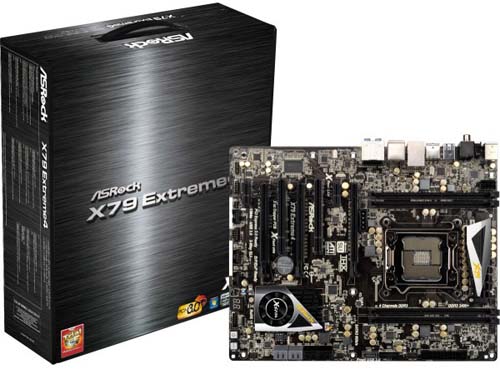
Also, the attached 'org.chameleon.Boot.plist' has busratio set to '42' change that value to correspond with whatever your cpu is set at, the system performs best with this boot flag, even though the bootloader assigns the ratio correctly without it, I noticed increased performance with it added. It isn't placebo effect, check this thread for more info: Note that this may only be the case when either overclocking or if 'busratio=' overrides some form of stepping when cpu power management is in effect, which isn't the case with LGA 2011 atm, just some thoughts, I honestly don't know the real reason behind it.Graphics Power Management: First of all, this only applies to people using an NVIDIA GTX 470, I've modified AppleGraphicsPowerManagement.kext & AppleGraphicsControl.kext for full graphics power management support, it requires the model id iMac12,2. MultiBeast 5.0.2 configuration.System Version is 10.8.1 Note: The AppleHDA attached is just the Mountain Lion vanilla kext Credits -Operating System: Apple Computers Inc.Installation Method: tonymacx86 & MacMan for Unibeast.MultiCore support: -Sleep Mode: -Ethernet: -USB 3.0: -Onboard Audio: & -AGPM: Based off of the work found here: -Trim Support: -Multibeast: tonymacx86 -Bootloader: & MacMan for the 'Chimera' branch. Org.chameleon.Boot.plist.zip smbios.plist.zip AppleGraphicsPowerManagement.kext.zip AppleGraphicsControl.kext.zip VoodooHDA.kext.zip VoodooTSCSync.kext.zip DSDT with GTX 470s Graphics Entry.zip DSDT without any Graphics Entry.zip AppleHDA.kext.zip IONetworkingFamily.kext.zip ASMedia1042 10.8 USB3.0.zip SleepEnabler.kext.zip AppleLPC.kext.zip Unibeast Extra.zip.
Thank you very much for these instructions. They helped a lot! I've a Geforce GTS450 and the X79-Extreme4-M mainboard, which is the micro-atx version. I got Mountain Lion running using your DSDT.
Sleep mode doesn't work perfectly. It goes to sleep successfully, but the graphics card seems to still have a problem with sleep, since the screen shows a just different colored squares on wake up. (SleepEnabler installed, Deep Sleep mode in Bios is disabled) I tried your modified AppleGraphicsControl.kext and AppleGraphicsPowerManagement.kext but without any success. Do I have to modify these for the GTS450, or don't they work for the GTS450? (Identifier is iMac 12,2).
Or do I have do modify the DSDT for the X79-Extreme4-M, to get sleep-mode working correctly? I also recognized that the AppleIntelCPUPowerManagement.kext is loaded besides the NullCPUPowerManagement.kext.
Can this cause any problems? Hi, I'm currently building a X79SUP5 build with same Xeon Processor you have. I'm using the same VoodooTSCSync you posted with IOPCUNUmber modifed to 11 (to match Xeon i guess). But you mentionned in your post that a DSDT edit is needed in order to work correctly.What's that edit? I have a working DSDT for my motherboard and i'm not a noob concerning hackintosh (built a real lot of them). Your help woulb be graetly apreciated! EDIT:VoodooTSCSync wasn't the problem at all.
Problem was my dsdt witch doesn't allow CPU Throtteling. I just disabled CPU EIST function in BIOS and BAAM: 20594 points Geekbench! Way higher than I expected in fact! Thanks for sharing. Worked quite well for me (ASRock Extreme 4M), however onboard firewire is kind of flawed: It does detect my audio interface but as soon as I start playback, my keyboard (USB as well as Bluetooth) stop working. I switched to firewire via PCI card (Allegro), there it's all fine.
Also, the instructions are wrong at one point: You cannot update ML before kexts are installed, because networking is does not work yet;-) With multiplier set to x42 I get for 32bit geekbench score around 18000 which I guess is due to my 1600 RAM modules. I left CPU voltage at default and so far everything is stable with temperatures between 44 and 55°C. Not tested yet: - USB3 - onboard audio and HDMI audio (don't need it) - sleep (I always shut down completely. With SSD boot time is negligible) If anyone is interested in a µATX build, mine is: ASRock Extreme 4M Core i7-3930K Samsung 256GB SSD 2x WD Red 3TB (one for Backup, one for Fusion Drive) Noctua NH-D14 SE2011 16GB RipjawsZ 1600 RAM Zotac GForce 8800GT (soon to be replaced with a GTX560) be quiet Straight Power 680W Installation according to the steps in the OP, however my multibeast looked a bit different (some FakeSMC plugins were missing), I installed kexts with kextbeast, and copied DSDT etc. To the Extra folder using Finder. Update: Sleep is working in the meantime.
No issues so far (besides having to wait for a couple of seconds for my bluetooth keyboard to reconnect).